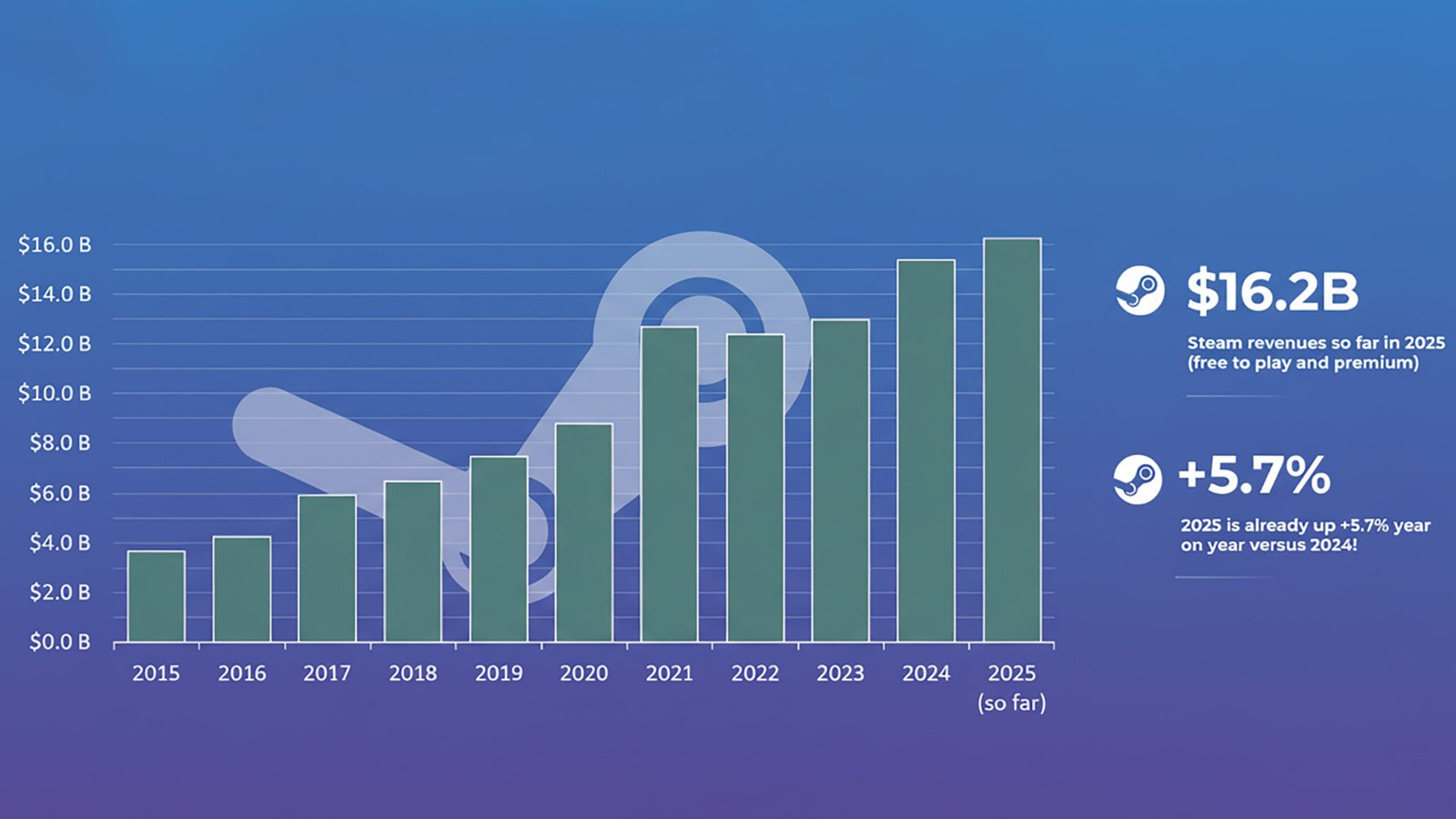
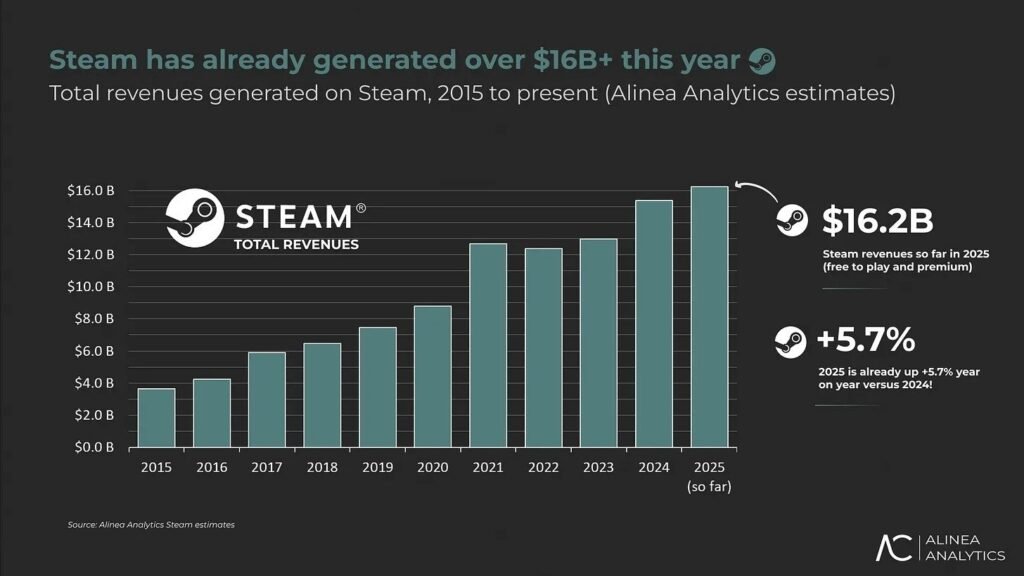
Steam has achieved yet another remarkable milestone in 2025, generating an estimated $16.2 billion in sales from January through mid-November, with projections suggesting the total could exceed $16.5 billion by year’s end, even before the holiday shopping season and Steam’s annual Holiday Sales event kick in. This figure represents a 5.7% increase over the platform’s 2024 performance, which clocked in at approximately $15.33 billion, underscoring Steam’s continued dominance in the PC gaming market despite growing competition from platforms like the Epic Games Store and Microsoft Store. The data comes from analyst Rhys Elliott of Alinea Analytics, who tracks Steam’s revenue through publicly available sales estimates and platform metrics, highlighting the collective earnings from thousands of games available on the storefront.
Under Valve’s longstanding revenue model, the company takes a 30% cut of each game’s sales until it surpasses $10 million in revenue, dropping to 25% for earnings between $10 million and $50 million, and further reducing to 20% once a title exceeds $50 million— a structure that has netted Valve around $4 billion in 2025 alone from these transactions. This approach contrasts with competitors like Epic, which charges only 12%, yet Steam retains fierce loyalty from its massive user base, evidenced by a record-breaking concurrent player peak of 41.6 million users earlier this year, reflecting the platform’s unmatched ecosystem of games, community features, and hardware integrations.
Adding a touch of extravagance to the news, Valve co-founder Gabe Newell marked the occasion by acquiring a lavish $500 million superyacht named Leviathan, a 111-meter custom vessel built by Dutch shipyard Oceanco. The yacht, designed for ultimate luxury, accommodates 22 guests and 33 crew members, boasting amenities such as two gyms, a spa, a bar, a basketball half-court, a beach club, a small onboard hospital, and an entertainment room equipped with 15 high-end gaming PCs—perfectly aligning with Newell’s gaming heritage. Looking ahead, Valve continues to invest in hardware innovations like the anticipated Steam Machine PC, Steam Frame VR headset, and updated Steam Controllers, while fan speculation swirls around potential system-sellers such as Half-Life 3, which could propel Steam’s growth even further into 2026.
Source: tweaktown