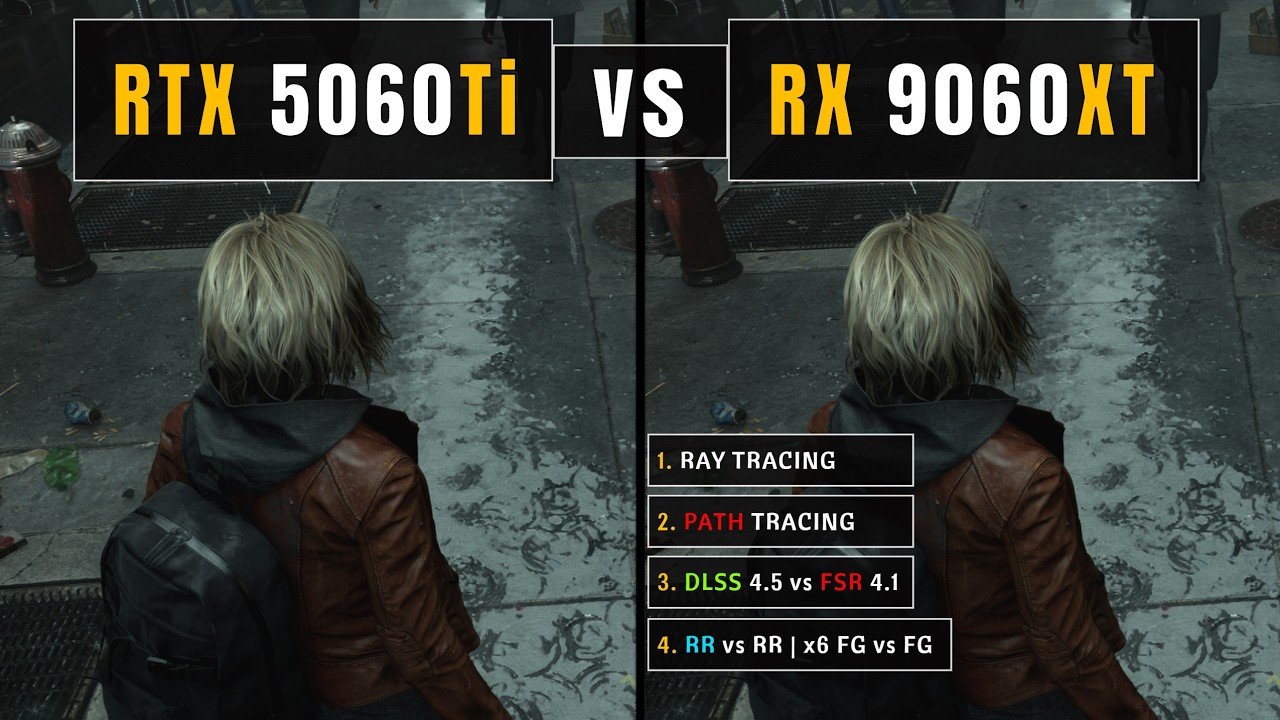
In this article, we take an in depth look at two mid range graphics cards, the AMD Radeon RX 9060 XT 16GB and the NVIDIA GeForce RTX 5060 Ti 16GB, focusing on their performance across 1440p gaming in 14 of the latest and most popular games of 2026. We also include an updated 1080p benchmark comparison of the RTX 5060 Ti 16GB vs RX 9060 XT 16GB to provide a clearer picture of how both GPUs perform at lower resolution. The analysis covers raw rasterization performance with side by side comparisons to highlight real world frame rate differences. It also explores Ray Tracing and Path Tracing performance using DLSS 4.5 and 4.0 alongside FSR 4.1 and 4.0, as well as advanced features like DLSS Ray Reconstruction, AMD Ray Regeneration, and 6x Multi Frame Generation at both 1080p and 1440p. In addition, we break down the test system setup and specifications of both graphics cards to help gamers make a practical and informed choice for modern mid range PC builds.
In This Article
Toggle丨NVIDIA GeForce RTX 5060 Ti 16GB Overview
The NVIDIA GeForce RTX 5060 Ti 16GB was released on April 16, 2025, with a launch price of around $429, is part of NVIDIA’s GeForce RTX 50 Series lineup. It features 16GB of GDDR7 VRAM, a 128-bit memory bus, and a memory bandwidth of 448 GB/s. The GPU supports ray tracing and AI technologies such as DLSS 4.5, and has a base clock speed of 2407 MHz. It is built for gaming at 1080p and 1440p resolutions, and can also handle tasks like content creation, streaming, and AI-accelerated workloads.
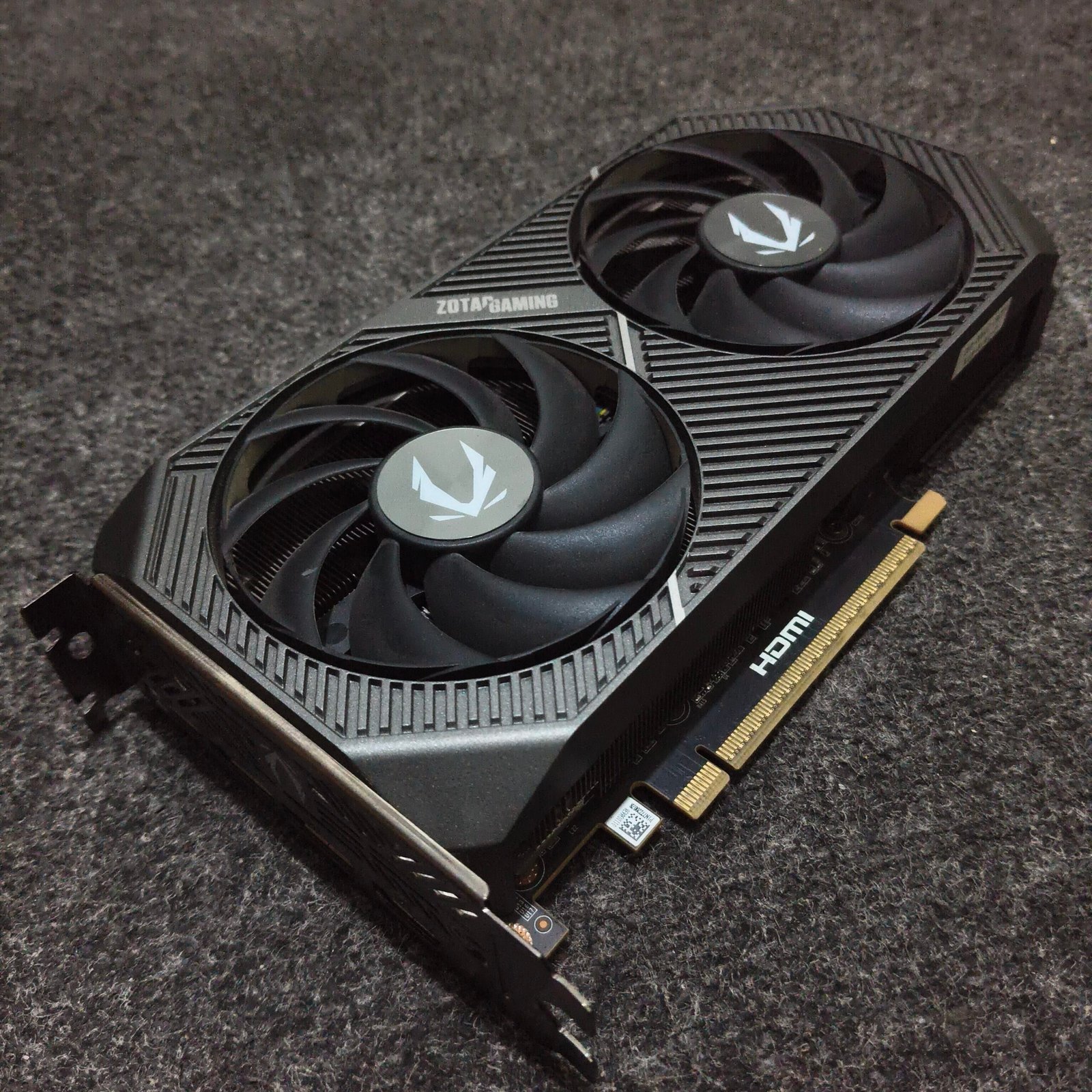
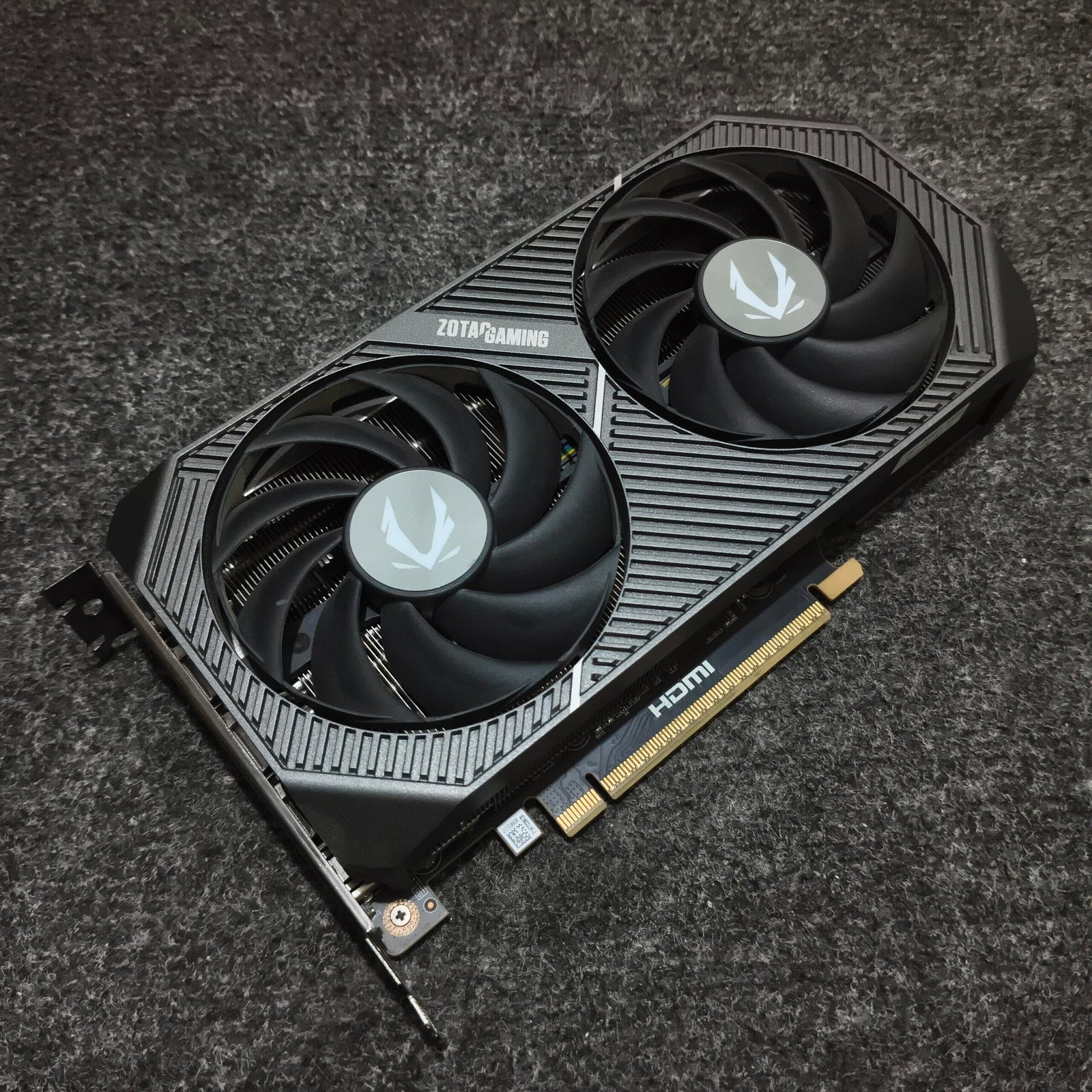
ZOTAC Twin Edge OC GeForce RTX 5060 Ti 16GB
Architecture
The RTX 5060 Ti is built on NVIDIA’s Blackwell architecture, which comes after Ada Lovelace. It has 4th generation ray tracing cores for lighting, shadows, and reflections, and 5th generation Tensor cores for AI features like DLSS 4 and multi-frame generation. This architecture supports faster clock speeds, modern memory, and better power efficiency, helping the GPU run games and applications with ray tracing and AI enhancements more smoothly.
Specifications and Features
In terms of specifications, The RTX 5060 Ti 16GB has 4,608 CUDA cores, 36 RT cores, and 144 Tensor cores. It runs at a base clock of 2,407 MHz and can boost up to 2,572 MHz, with some overclocked models reaching around 2,692 MHz. The card includes 16GB of GDDR7 memory on a 128 bit bus, giving 448 GB/s of bandwidth. It supports PCIe 5.0 x8, DisplayPort 2.1, HDMI 2.1, and can output up to 8K at 165Hz. The card has a 180W TDP and uses a single 8-pin power connector, with a 450–600W PSU.
丨AMD Radeon RX 9060 XT 16GB Overview
The AMD Radeon RX 9060 XT 16GB was officially launched on June 4, 2025, with a suggested retail price of $349 for the 16 GB model, positioning it as a strong competitor in the mid‑range GPU segment against similarly priced cards from NVIDIA. The card brings a generous 16 GB of GDDR6 memory, modern feature support like DirectX 12 Ultimate and PCIe 5.0, and AMD’s latest graphics technologies aimed at delivering smooth performance in both current and future games at 1080p and 1440p resolutions. Its pricing and release timing made it one of the more attractive value options in 2025, especially for gamers who want larger VRAM for future‑proofing without breaking their budget.
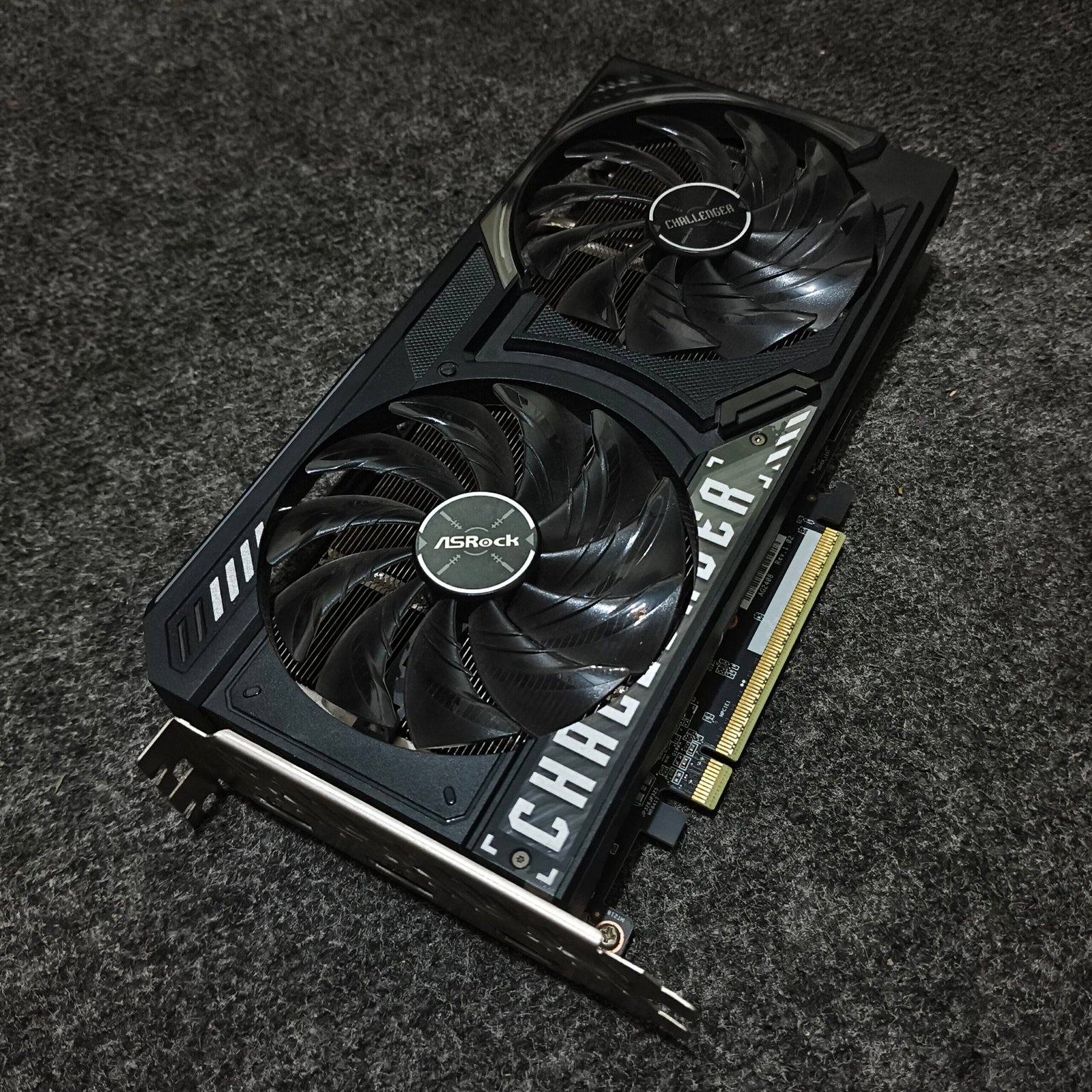
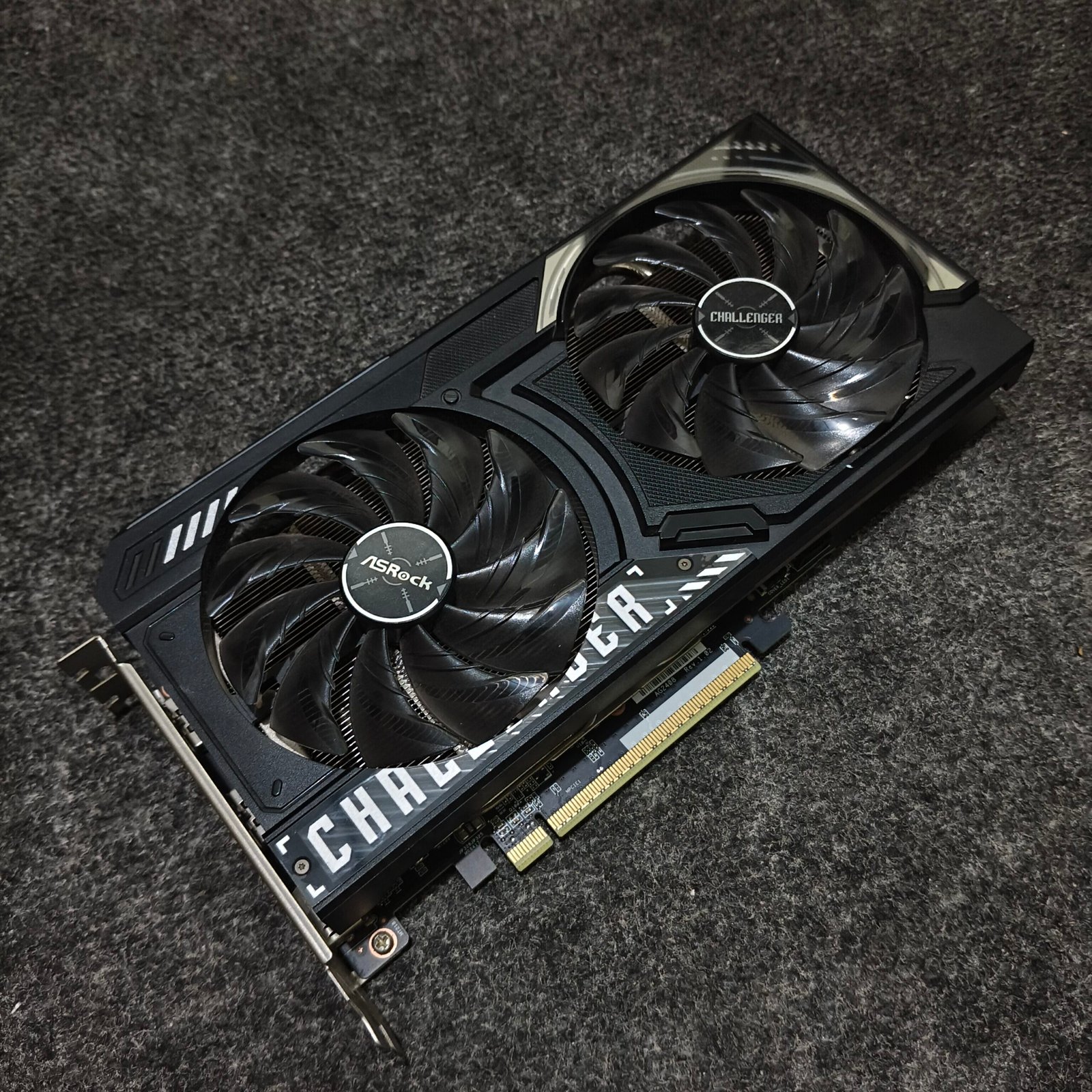
ASRock Challenger Radeon RX 9060 XT 16GB
Architecture
The Radeon RX 9060 XT 16GB is built on AMD’s RDNA 4 architecture, a successor to the RDNA 3 generation that focuses on efficiency, higher clocks, improved ray tracing, and better AI‑assisted upscaling support. This modern architecture includes 3rd‑generation ray tracing accelerators for better lighting and reflections, and 2nd‑generation AI cores that help power AMD’s FidelityFX Super Resolution 4 (FSR4) upscaling technology. RDNA 4 also brings enhancements in media encoding, noise suppression features, and compatibility with advanced display standards such as DisplayPort 2.1a and HDMI 2.1b, making the card versatile not just for gaming but for streaming and content creation as well.
Specifications and Features
In terms of specifications, the RX 9060 XT 16GB uses the Navi 44 XT GPU with 2,048 stream processors, 128 texture mapping units, and 64 render output units. The GPU is manufactured on a TSMC 4 nm (N4P) process, which helps balance performance and power efficiency, and it operates with a boost clock up to approximately 3,130 MHz. Memory is delivered through 16 GB of GDDR6 on a 128‑bit bus, giving sufficient bandwidth to support high quality textures and large game assets, while a 160 W board power draw keeps power requirements reasonable for most mid‑range systems. Connectivity options include multiple DisplayPort and HDMI outputs, while the PCIe 5.0 x16 interface ensures compatibility with the latest motherboards.
丨RTX 5060 Ti vs RX 9060 XT Creator and Productivity Performance Breakdown
When it comes to productivity performance, the RTX 5060 Ti 16GB and the RX 9060 XT 16GB take noticeably different approaches, with NVIDIA clearly focusing more on creator and professional workloads, while AMD leans more toward raw performance and value. The RTX 5060 Ti, based on NVIDIA’s newer architecture, benefits heavily from CUDA cores and dedicated Tensor cores, which play a major role in accelerating modern applications, especially those that rely on AI and GPU compute. This gives it a strong advantage in software like Adobe Premiere Pro, DaVinci Resolve, Blender, and other content creation tools, where GPU acceleration is deeply optimized for NVIDIA hardware. In video editing, for example, the RTX 5060 Ti delivers smoother timeline playback, faster rendering of effects, and quicker export times thanks to its NVENC encoder and broader software support. In 3D rendering workloads such as Blender, NVIDIA’s CUDA and OptiX technologies significantly outperform AMD’s alternatives, resulting in much faster render times and better efficiency in complex scenes.
On the other hand, the RX 9060 XT 16GB, while still a capable GPU, relies on AMD’s RDNA architecture and uses stream processors instead of CUDA, which limits its optimization in many professional applications. While AMD has improved support through technologies like HIP and ROCm, it still does not match the maturity or widespread adoption of NVIDIA’s ecosystem. This becomes even more apparent in AI-related workloads, where the RTX 5060 Ti stands far ahead due to its Tensor cores and significantly higher AI compute capability, making it much better suited for tasks like Stable Diffusion, AI upscaling, and local AI model inference. In Adobe applications such as Photoshop and After Effects, both GPUs perform well, but NVIDIA again holds a slight edge due to better optimization for GPU-accelerated effects and AI-based features. However, in general compute or non-optimized workloads, the RX 9060 XT can sometimes match or slightly edge out the RTX 5060 Ti in raw throughput, although this advantage is often overshadowed by weaker software support.
Overall, the difference comes down to ecosystem and optimization rather than just raw hardware power. The RTX 5060 Ti 16GB is the stronger choice for productivity, offering better performance, broader compatibility, and superior AI capabilities across most professional applications, while the RX 9060 XT 16GB is more suited for users who prioritize gaming performance and only engage in light or occasional creative work.
丨RTX 5060 Ti VS RX 9060 XT Specs Comparison
Compare NVIDIA’s RTX 5060 Ti 16GB and AMD’s Radeon RX 9060 XT 16GB in a detailed side-by-side analysis. This comparison covers GPU architecture, CUDA and stream processors, memory capacity, clock speeds, ray tracing and AI capabilities, power consumption, connectivity, release date, MSRP, and current pricing.
|
Name
|
Geforce RTX 5060 Ti
|
Radeon RX 9060 XT
|
|---|---|---|
|
GPU Name
|
GB206
|
Navi 44
|
|
Architecture
|
Blackwell 2.0
|
RDNA 4.0
|
|
Memory Size
|
16GB
|
16GB
|
|
Memory Type
|
GDDR7
|
GDDR6
|
|
Memory Bus
|
128 bit
|
128 bit
|
|
Bandwidth
|
448.0 GB/s
|
322.3 GB/s
|
|
Base Clock
|
2407 MHz
|
1700 MHz
|
|
Boost Clock
|
2572 MHz
|
3130 MHz
|
|
Memory Clock
|
1750 MHz
28 Gbps effective
|
2518 MHz
20.1 Gbps effective
|
|
Shading Units
|
4608
|
2048
|
|
TMUs
|
144
|
128
|
|
ROPs
|
48
|
64
|
|
SM Count
|
36
|
32
|
|
Tensor Cores
|
144
|
64
|
|
RT Cores
|
36
|
32
|
|
TDP
|
180 W
|
160 W
|
|
Suggested PSU
|
450 W
|
450 W
|
|
Interface
|
PCI Express 5.0 x8
|
PCIe 5.0 x16
|
|
Display Outputs
|
1× HDMI 2.1b, 3× DisplayPort 2.1b
|
1x HDMI 2.1b, 2x DisplayPort 2.1a
|
|
Release Date
|
Apr 16th, 2025
|
Jun 4th, 2025
|
|
Launch Price
|
429 USD
|
349 USD
|
|
Market price
|
||
|
Market price
|
The NVIDIA GeForce RTX 5060 Ti and AMD Radeon RX 9060 XT are both 16GB graphics cards, with the RTX 5060 Ti using GDDR7 memory and the RX 9060 XT using GDDR6. They share a 128-bit memory bus, though the RTX offers higher bandwidth at 448 GB/s compared to 322.3 GB/s. Clock speeds differ, with the RTX 5060 Ti having a higher base clock of 2407 MHz and the RX 9060 XT a higher boost clock of 3130 MHz. The RTX 5060 Ti has more shading units, TMUs, tensor cores, and RT cores, while the RX 9060 XT has slightly more ROPs. Power requirements are similar, around 180 W and 160 W, with recommended PSUs at 450 W. The cards feature PCIe 5.0 support and multiple display outputs, with launch dates in April and June 2025 and prices of $429 and $349 respectively.
RTX 5060 Ti VS RX 9060 XT Performance Comparison
丨14 Games Tested
We tested the AMD Radeon RX 9060 XT 16GB and the NVIDIA GeForce RTX 5060 Ti 16GB across 14 of the latest and most popular games at 1440p resolution to evaluate their raw rasterization performance in 2026. Since both graphics cards feature 16GB of VRAM, they are well suited for modern 1440p gaming where higher memory capacity is becoming increasingly important for handling detailed textures and demanding game engines. This benchmark focuses strictly on native raster performance without ray tracing, allowing a clear comparison of real gaming performance between the two GPUs. To create a more realistic setup for budget and mid range gamers, the system was powered by the Intel Core i5‑12400F rather than a high end processor, reflecting the type of configuration many users typically pair with mid range graphics cards in real world gaming systems. For a complete breakdown of individual game performance, detailed frame rate analysis, and side by side comparisons, you can also watch our full benchmark video on our YouTube Channel, where we showcase real time gameplay results and in depth testing for a better visual understanding of how both GPUs performs.
丨Testing System
Our test system was built with a balanced set of reliable components to reflect a real world mid range gaming setup. We used the GIGABYTE Z790 Gaming X AX DDR5 motherboard paired with the Intel Core i5-12400F processor, which is a popular choice among gamers. The system was equipped with G.SKILL Trident Z5 32GB DDR5 6000MHz (2×16GB) memory to ensure smooth performance across all tested games. For storage, we installed the Samsung 860 EVO 1 TB, allowing fast load times and consistent performance during benchmarking. For GPU testing, we used both the ASRock Radeon RX 9060 XT 16GB Challenger Edition and the ZOTAC Gaming GeForce RTX 5060 Ti 16GB Twin Edge to keep the comparison fair and consistent. The entire system was powered by the Deepcool PQ850 850W Power Supply, providing stable power throughout all tests. This setup closely represents what many gamers actually use, making the benchmark results more practical and relatable.
As an associates of newegg – we may earn a small commission if you purchase through this affiliate links (no extra cost to you). It helps support the GAMING BENCH.
Benchmark Performance Comparison
|
Game Names
|
RX 9060 XT (16GB)
|
RTX 5060 Ti (16GB)
|
|---|---|---|
|
Space Marine 2
|
AVG FPS : 68
|
AVG FPS : 71 (+4.4%)
|
|
Resident Evil Requiem
|
AVG FPS : 90
|
AVG FPS : 84 (-6.6%)
|
|
Pragmata
|
AVG FPS : 85
|
AVG FPS : 85 (+0%)
|
|
Silent Hill F
|
AVG FPS : 44
|
AVG FPS : 52 (+18.1%)
|
|
Battlefield 6
|
AVG FPS : 90
|
AVG FPS : 95 (+5.5%)
|
|
Mafia The Old Country
|
AVG FPS : 49
|
AVG FPS : 49 (0%)
|
|
Kingdom Come Deliverance 2
|
AVG FPS : 52
|
AVG FPS : 60 (+15.3%)
|
|
Cyberpunk 2077
|
AVG FPS : 75
|
AVG FPS : 73 ( -2.6%)
|
|
The Last Of Us Part II
|
AVG FPS : 68
|
AVG FPS : 79 (+16.1%)
|
|
High On Life 2
|
AVG FPS : 57
|
AVG FPS : 56 (-1.7%)
|
|
Marvel's Spider Man 2
|
AVG FPS : 101
|
AVG FPS : 93 (-7.9%)
|
|
Alan Wake 2
|
AVG FPS : 53
|
AVG FPS : 49 (-7.5%)
|
|
ARC Raiders
|
AVG FPS : 80
|
AVG FPS : 90 (+12.5%)
|
|
Clair Obscur Expedition 33
|
AVG FPS : 52
|
AVG FPS : 52 (0%)
|
Across all 14 tested games, both the AMD Radeon RX 9060 XT 16GB and the NVIDIA GeForce RTX 5060 Ti 16GB deliver very close performance, but each card has its own strengths depending on the game. The RTX 5060 Ti comes out ahead in titles like Space Marine 2, Silent Hill F, Battlefield 6, Kingdom Come Deliverance 2, The Last of Us Part II, and ARC Raiders, where it shows noticeable improvements in frame rates, especially in more demanding or newer titles.
At the same time, the RX 9060 XT holds its ground well and performs better in games like Resident Evil Requiem, Cyberpunk 2077, High on Life 2, Marvel’s Spider-Man 2, and Alan Wake 2, although the difference in these titles is generally smaller. There are also a few games such as Pragmata, Mafia: The Old Country, and Clair Obscur: Expedition 33 where both GPUs perform almost exactly the same, showing how evenly matched they are in certain scenarios.
More Benchmarks
- RX 6600 2026 Review, 26 Games Tested, Still Worth Buying?
- NVIDIA Driver 596.21 vs 595.79 vs 591.86 vs 595.97
- 8 GPUs – PRAGMATA: RTX 5060, 5060 Ti, 5070 Ti, 2060, RX 9060 XT
- Samson Performance on RTX 2060 at 1080p – Native, DLSS, FSR 3
- RTX 5060 vs 3070 vs RX 6700 XT – Raw Performance Comparison
- 12 GPUs – Crimson Desert: RX 9060 XT, 6600, GTX 1660s, RTX 5070 Ti, 5070
- Crimson Desert RTX 2060 Tested at 1080p – Optimized Settings & FPS Analysis
- Resident Evil Requiem: Testing 6 GPUs – RTX 5060, 3070, 5060 Ti, RX 9060 XT
- Resident Evil Requiem: Tested 5 GPUs – GTX 1050 Ti, 1660s, RTX 2060, RX 6600
- Resident Evil Requiem tested on RTX 2060, DLSS 4 and Texture VRAM Testing
- RTX 5080 vs RTX 4090 Ultimate Comparison (1080p, 1440p, 2160p)
RTX 5060 Ti vs RX 9060 XT
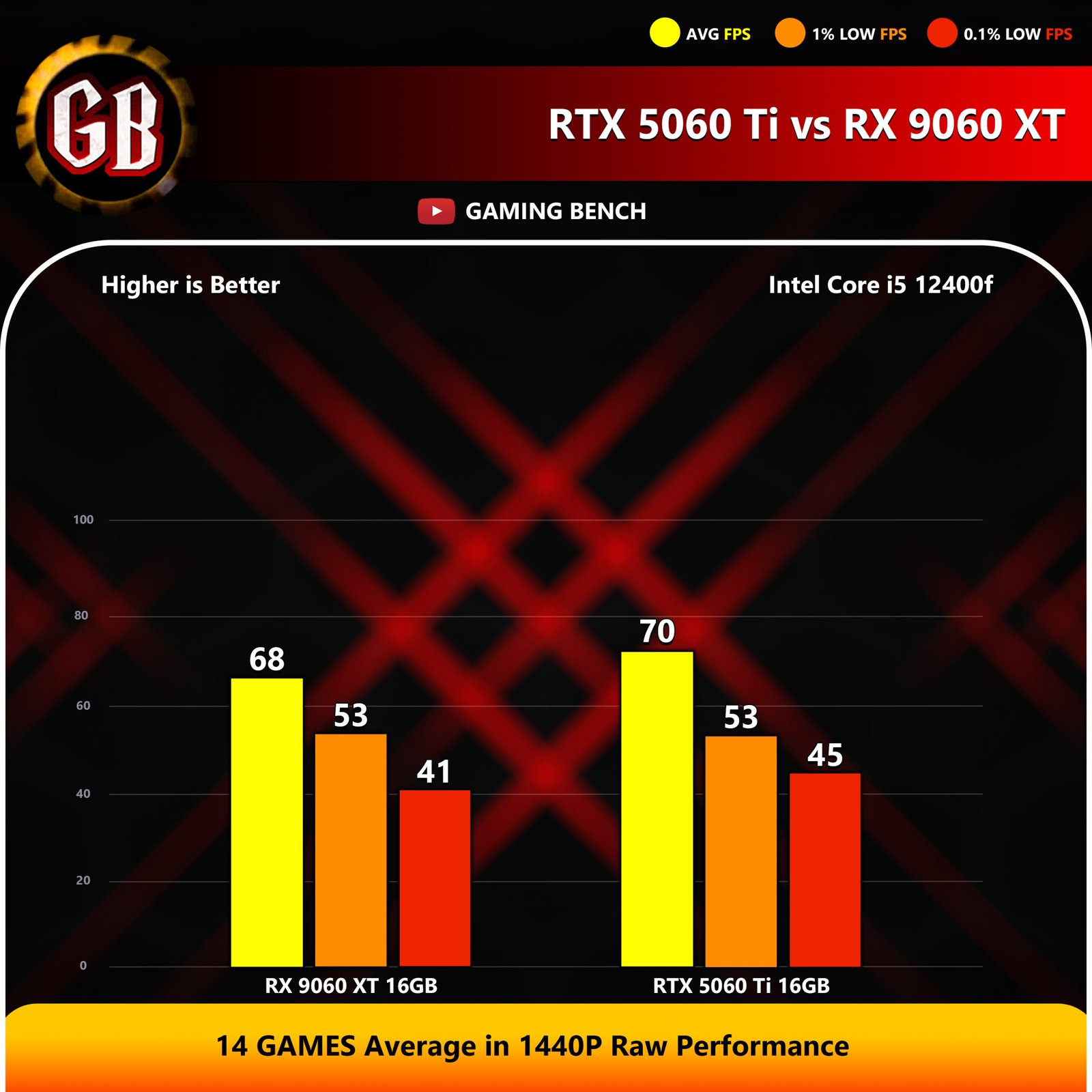
In our 1440p testing across 14 demanding titles, the RTX 5060 Ti delivered an average of 70 FPS, while the RX 9060 XT averaged 68 FPS. This gives the RTX 5060 Ti a modest 2.94% lead in raw rasterization performance. However, it’s important to note that the RTX 5060 Ti comes with a higher MSRP of $429, compared to the RX 9060 XT’s $349. While the performance gap is relatively small in real gameplay, NVIDIA gains an advantage through its feature set, including stronger ray tracing and AI powered DLSS 4.5, which can significantly improve performance and image quality in supported titles. Meanwhile, AMD counters with FSR 4, offering reliable upscaling performance and broader compatibility across different hardware.
RTX 5060 Ti vs RX 9060 XT Ray/Path Tracing Test
In this test, we look at how the Radeon RX 9060 XT and the RTX 5060 Ti handle some of the latest and most demanding games, focusing on Ray Tracing and Path Tracing with DLSS 4.5 and 4.0, as well as FSR 4.1 and 4.0. We also test advanced features like DLSS Ray Reconstruction, AMD Ray Regeneration, and 6x Multi Frame Generation and Dynamic Frame Generation to see how they affect both performance and visuals. All benchmarks are done at 1080p and 1440p to show how these cards perform in real-world gaming. To make this setup more realistic for budget gamers, we used an Intel Core i5‑12400F instead of a high-end CPU, since many gamers pair mid-range GPUs with processors like this. You can also check out the full benchmark video on our YouTube channel.
丨CPU Bottleneck Note
In some cases, the Intel Core i5-12400F can hold back the performance of both GPUs, especially at 1080p where CPU limitations are more noticeable. For example, in Marvel’s Spider-Man 2, the GPU doesn’t always hit 100% usage, showing that the CPU is limiting performance in certain situations.
丨Testing System
The test system uses a GIGABYTE Z790 Gaming X AX DDR5 motherboard with an Intel Core i5 12400F processor. It comes with 32 GB of G.SKILL Trident Z5 DDR5 RAM, set up as 2×16 GB and running at 6000 MHz with CL30 timings. For storage, there is a Samsung 850 EVO 1 TB SSD along with an XPG S40G 512 GB M.2 NVMe drive. The whole system is powered by an XPG Pylon 650 W 80 Plus Bronze power supply.
|
Component
|
Model / Specification
|
Check Prices
|
|
|---|---|---|---|
|
CPU
|
Intel Core i5 12400f
|
||
|
Motherboard
|
GIGABYTE Z790 Gaming X AX DDR5
|
||
|
RAM
|
G. SKILL Trident Z5 2x16GB DDR5 6000mhz
|
||
|
Power Supply
|
XPG Pylon 650w 80 Plus Bronze
|
||
|
Storage
|
Samsung 850Evo 1TB SSD
|
||
|
M.2 Storage
|
XPG S40G 512GB RGB M.2
|
||
|
Operating System
|
Window 10 - Version 22H2
|
||
As an associates of newegg – we may earn a small commission if you purchase through this affiliate links (no extra cost to you). It helps support the GAMING BENCH.
Benchmark Performance Comparison
|
Game Names
|
Graphic Settings
|
RX 9060 XT (16GB)
|
RTX 5060 Ti (16GB)
|
|---|---|---|---|
|
Crimson Desert
|
1080P ULTRA/RT/RR/FSR 4.1/DLSS 4.0 Quality
|
AVG FPS : 50
|
AVG FPS : 50 (+0.0%)
|
|
Crimson Desert
|
1440P ULTRA/RT/RR/FSR 4.1/DLSS 4.0 Quality
|
AVG FPS : 33
|
AVG FPS : 34 (+3.0%)
|
|
Crimson Desert
|
1440P ULTRA/RT/RR/FSR 4.1/DLSS 4.5 Q/FG/MFG x4
|
AVG FPS : 58
|
AVG FPS : 101 (+74.1%)
|
|
Marvel's Spider-Man 2
|
1080P Medium/RT High/FSR 4/DLSS 4.0 Quality
|
AVG FPS : 96
|
AVG FPS : 102 (+6.3%)
|
|
Marvel's Spider-Man 2
|
1440P Medium/RT High/FSR 4/DLSS 4.0 Quality
|
AVG FPS : 90
|
AVG FPS : 90 (+0.0%)
|
|
Cyberpunk 2077
|
1080P ULTRA/RT Medium/FSR 4/DLSS 4.0 Quality
|
AVG FPS : 87
|
AVG FPS : 93 (+6.9%)
|
|
Cyberpunk 2077
|
1440P ULTRA/RT Medium/FSR 4/DLSS 4.0 Quality
|
AVG FPS : 55
|
AVG FPS : 58 (+5.4%)
|
|
Cyberpunk 2077
|
1080P ULTRA/Path Tracing/FSR 4/DLSS 4.5 P + FG/MFG x6
|
AVG FPS : 108
|
AVG FPS : 290
|
|
Cyberpunk 2077
|
1080P ULTRA/Path Tracing/FSR 4/DLSS 4.5 P + FG/MFG x6
|
AVG FPS : 71
|
AVG FPS : 179
|
|
Silent Hill 2
|
1080P Medium/RT/FSR 4/DLSS 4.0 Quality
|
AVG FPS : 97
|
AVG FPS : 99 (+2.1%)
|
|
Silent Hill 2
|
1440P Medium/RT/FSR 4/DLSS 4.0 Quality
|
AVG FPS : 68
|
AVG FPS : 72 (+5.9%)
|
|
Resident Evil Requiem
|
1080P MAX/RT High/FSR 4/DLSS 4.0 Quality
|
AVG FPS : 84
|
AVG FPS : 84 (+0%)
|
|
Resident Evil Requiem
|
1440P MAX/RT High/FSR 4/DLSS 4.0 Quality
|
AVG FPS : 58
|
AVG FPS : 61 (+5.1%)
|
|
Resident Evil Requiem
|
1440P MAX/RT High/FSR 4/DLSS 4.0 Q + FG/MFG x4
|
AVG FPS : 102
|
AVG FPS : 156
|
Based on the benchmark results, the NVIDIA GeForce RTX 5060 Ti 16GB generally delivers higher performance compared to the AMD Radeon RX 9060 XT 16GB, particularly when advanced features and frame generation technologies are used. At standard Ray Tracing and FSR/DLSS settings, both GPUs perform similarly in some titles, such as Crimson Desert at 1080p, where average FPS is identical, and Resident Evil Requiem at 1080p, where performance is also equal. However, in most other scenarios, the RTX 5060 Ti shows consistent gains ranging from 3% to 7%, such as in 1440p Crimson Desert (+3%), Marvel’s Spider-Man 2 at 1080p (+6.3%), and Cyberpunk 2077 at 1080p (+6.9%).
The difference becomes more significant when utilizing Path Tracing, higher DLSS versions, and multi-frame generation features. For instance, in Cyberpunk 2077 at 1080p with Path Tracing, DLSS 4.5, and 6x Multi/Dynamic Frame Generation, the RTX 5060 Ti nearly triples the FPS compared to the RX 9060 XT (290 vs 108). Similar improvements are seen in Resident Evil Requiem with 1440p, Ray Tracing, DLSS/FPS enhancements, and Frame Generation, where the RTX 5060 Ti achieves 156 FPS versus 102 FPS on the RX 9060 XT.
RTX 5060 Ti vs RX 9060 XT 1080p Test
In this test, we compared the RTX 5060 Ti 16GB and RX 9060 XT 16GB across 14 of the latest and most popular games at 1080p to see how they really perform without any extras like ray tracing. This comes after my earlier 1440p and ray tracing tests with DLSS 4 and FSR 4, but here the focus is on pure raster performance so you can see the real difference in gameplay. I paired both GPUs with an i5-12400F to keep things realistic for budget and mid range builds. If you’re planning a 1080p gaming setup in 2026, this should give you a clear idea of what to expect from both cards in actual games.
丨Testing System
All tests were done using the same system, same settings, and the latest drivers to keep things fair and consistent. We’ve included real gameplay benchmarks, FPS comparisons, 1% lows, and frame time data so you can clearly see how both GPUs perform in actual gaming.
Benchmark Performance Comparison
|
Game Names
|
Graphic Settings
|
RX 9060 XT (16GB)
|
RTX 5060 Ti (16GB)
|
|---|---|---|---|
|
Death Stranding 2
|
1080P Very High Graphics
|
AVG FPS : 75
|
AVG FPS : 72 (-4%)
|
|
Battlefield 6
|
1080P High Graphics
|
AVG FPS : 126
|
AVG FPS : 140 (+11.1%)
|
|
Silent Hill F
|
1080P Very High Graphics
|
AVG FPS : 73
|
AVG FPS : 75 (+2.7%)
|
|
Clair Obscur Expedition 33
|
1080P High Graphics
|
AVG FPS : 88
|
AVG FPS : 83 (-5.7%)
|
|
Resident Evil Requiem
|
1080P Max Graphics
|
AVG FPS : 130
|
AVG FPS : 119 (-8.5%)
|
|
High On Life 2
|
1080P High Graphics
|
AVG FPS : 83
|
AVG FPS : 77 (-7.2%)
|
|
Space Marine 2
|
1080P Ultra Graphics
|
AVG FPS : 101
|
AVG FPS : 97 (-4.0%)
|
|
Mafia The Old Country
|
1080P Medium Graphics
|
AVG FPS : 75
|
AVG FPS : 69 (-8.0%)
|
|
The Last Of Us Part 2
|
1080P High Textures / Very High
|
AVG FPS : 93
|
AVG FPS : 106 (+14%)
|
|
Kingdom Come Deliverance 2
|
1080P Ultra Graphics
|
AVG FPS : 74
|
AVG FPS : 82 (+10.8%)
|
|
Cyberpunk 2077
|
1080P Ultra Graphics
|
AVG FPS : 115
|
AVG FPS : 123
|
|
Alan Wake 2
|
1080P Low Graphics
|
AVG FPS : 75
|
AVG FPS : 71 (-5.3%)
|
|
Spider-Man 2
|
1080P Medium Graphics
|
AVG FPS : 136
|
AVG FPS : 130 (-4.4%)
|
|
Forza Horizon 5
|
1080P Ultra Graphics
|
AVG FPS : 210
|
AVG FPS : 200
|
Across these 14 games at 1080p, both GPUs deliver very close overall performance, with small wins trading back and forth depending on the title. The RX 9060 XT leads in several games, especially in titles like Resident Evil Requiem, High On Life 2, and Spider Man 2, while the RTX 5060 Ti pulls ahead in others such as Battlefield 6, The Last Of Us Part 2, and Kingdom Come Deliverance 2. In most cases, the difference stays within a single digit margin, showing that both cards are well matched for 1080p gaming.
✦ Overview
Overall, the RTX 5060 Ti still leads in more games, usually by a small margin, giving it a slight edge. The RX 9060 XT remains very competitive and even pulls ahead in certain titles, so the gap between the two is not significant. Both GPUs handle 1440p gaming well, and that trend continues at 1080p, where performance remains closely matched. Just like in the 1440p tests, results at 1080p depend heavily on the game engine and optimization, with some titles favoring AMD while others perform better on NVIDIA. This makes the choice less about a clear winner and more about the games you play. Alongside raw performance, NVIDIA still holds an advantage with DLSS 4.5 and Multi or Dynamic Frame Generation, while AMD’s FSR 4.1 continues to improve and offers a solid alternative where supported.

Video Creator
I’m Shoaib Ahmed, Founder of GAMING BENCH. I test games and run detailed benchmarks across various hardware setups, sharing the results on my YouTube channel Since 2019 with real time gameplay.

Author
i’m Afaq Butt author of GAMING BENCH Website. I transforms our youtube benchmarks into clear, structured articles, making the insights easily accessible. Our goal is to provide gamers with reliable, data-driven information to help them make informed decisions and optimize their gaming experience.